Thank you to Lindsay Jones from the Libraries Accessibility Service for this guest post.

Introduction and background
In response to multiple requests from disabled students for audiobooks with human narrators, a boom in audiobook popularity, and growing audiobook provision in higher education libraries, the Libraries Accessibility Service ran a small digital audiobook trial in Lent Term 2022. You can read more about the trial and findings in our LILAC conference presentation.
The trial was successful and feedback showed that audiobooks could benefit disabled students as well as their non-disabled peers. One participant summed up the challenges of reading ‘by sight’, and the benefits of audiobooks:
I often find it difficult to focus on reading for extended periods of time. I find listening to the book contents much more effective and efficient in terms of my overall learning. I believe audiobooks can help many students like me to not give up on exploring subjects they are curious about just because they find reading challenging.
After some challenges in finding a suitable provider, the Libraries Accessibility Service and the ebooks@cambridge team soft-launched the University of Cambridge Libraries and Archives BorrowBox service in October 2024.
Collection development
The starter collection was shaped by requests from disabled students and evidence of popular titles from ebook COUNTER usage statistics. BorrowBox added further content to strengthen the collection. Ongoing development is guided by the Collection Development Policy, which prioritises disabled student requests, although requests from other University members are also welcome where funding is available from their College, Faculty, or Departmental library.
To request a new audiobook, email audiobooks@lib.cam.ac.uk.
Accessing BorrowBox
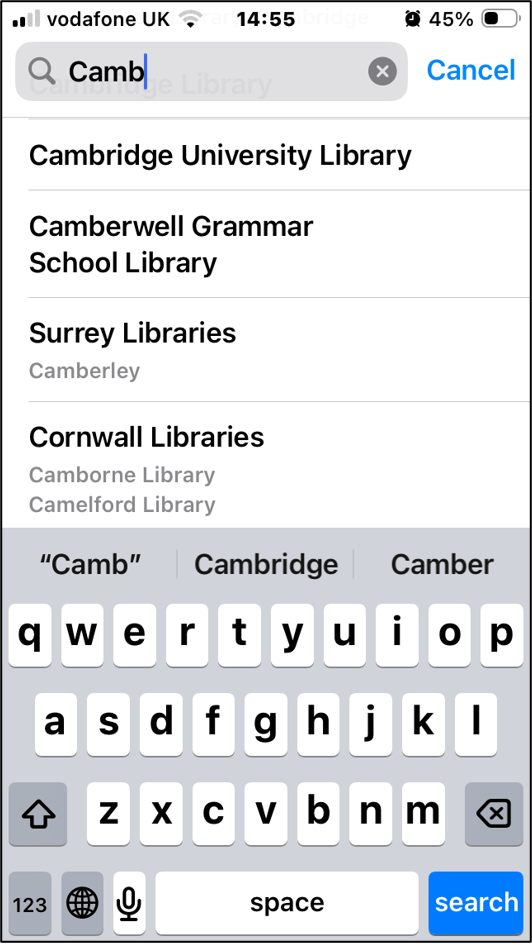
All current University members can access BorrowBox with their University IT account (on and off campus) via a browser or the BorrowBox app (available from the App Store, Google Play and Amazon appstore). In the app, select Cambridge University Library as your library when signing in:
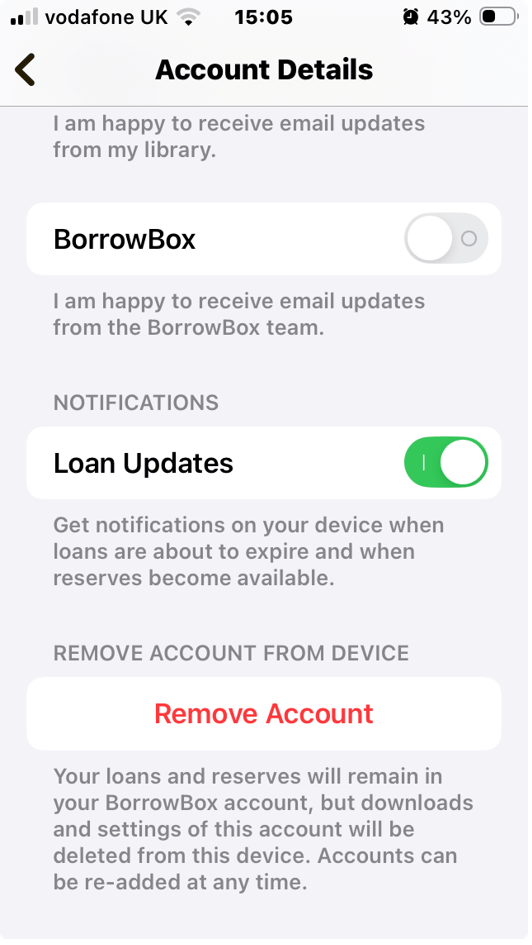
When using the app, if you have a public library BorrowBox account, you will need to ‘Remove Account’ (via Account Details) before accessing the CULA account, and vice versa:
Once signed in, you can borrow or reserve up to five audiobooks at a time. Loans are for seven days and renewals are possible. BorrowBox uses a one-copy, one-user model, so only one person can borrow an audiobook at a time. However, where demand is high, we can consider purchasing additional copies to improve access.
There are plenty of features online and in the app to help you enjoy the audiobooks, including adjusting the playback speed, remembering where you left off and seamless synching between the browser and app.
BorrowBox audiobooks are catalogued in iDiscover (for example, Pedagogy of the oppressed). You can use Refine my results to narrow your search by Resource Type to Audiobook.
BorrowBox and Leganto
From summer 2026, Leganto reading list owners are encouraged to include links to audiobook versions where available (library staff: see updated Leganto instructions on the Cambridge libraries intranet).
Usage
Promotion so far has been deliberately modest, but BorrowBox has nevertheless seen good usage. On July 31st, 2026, 826 users had signed up, and 2113 audiobook loans transacted since the service began. Reading list titles consistently appear in the top twenty, showing that audiobooks can be relevant for academic as well as leisure reading.
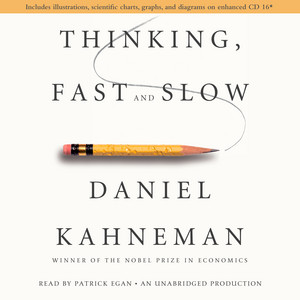
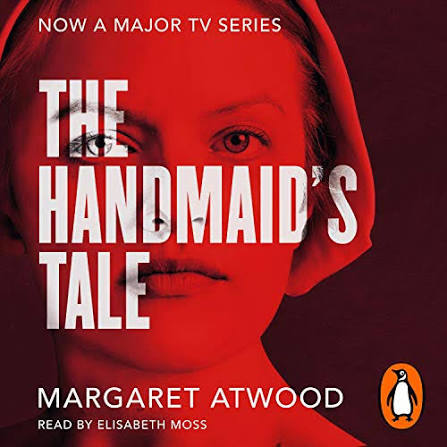
Top twenty BorrowBox audiobooks since October 2024:
| Title | Loans | Reserves | On a reading list? |
| Thinking fast and slow | 44 | 5 | Yes |
| The handmaid’s tale | 38 | 6 | Yes |
| Unruly: a history of England’s kings and queens | 38 | 5 | No |
| The body in pain | 36 | 6 | Yes |
| Richard III: the self-made king | 34 | 8 | No |
| The Iliad: Penguin Classics | 30 | 9 | Yes |
| All about love: new visions | 30 | 3 | Yes |
| The body keeps the score | 26 | 8 | Yes |
| Climate change: a very short introduction | 25 | 6 | Yes |
| H is for Hawk | 25 | 3 | No |
| The age of surveillance capitalism | 24 | 4 | Yes |
| The stopping places | 24 | 3 | No |
| England’s culture wars | 23 | 13 | No |
| The testaments | 23 | 8 | Yes |
| The Odyssey: Penguin Classics | 23 | 8 | Yes |
| The human condition | 23 | 3 | Yes |
| Shakespeare’s kings | 22 | 14 | No |
| Why Marx was right | 22 | 11 | Yes |
| Prophet song | 22 | 5 | No |
| The Thursday murder club | 21 | 4 | No |
What next? Audiobooks and AI
Increasingly realistic and expressive synthetic voices can offer a viable alternative to human-narrated audiobooks, if approached with caution. Audible is partnering with some publishers to create AI-narrated audiobooks. Open Book Publishers’ experiments with audio are one example of an academic publisher using AI to create audiobooks. Services such as Paper2Audio are using AI to try to solve some of the problems inherent in listening to academic works (such as summarising diagrams and skipping footnotes and other ‘junk text’ (their words!) which can interrupt the flow).
Readers can also use text-to-speech tools such as Natural Reader and Speechify to convert digital text to increasingly natural-sounding audio. Nevertheless, there is still value, in my opinion, in offering a ready-made, curated collection of relevant audiobooks with high-quality narration in a single place, and this is supported by the BorrowBox usage data above.
Further information
Contact audiobooks@lib.cam.ac.uk with questions about access or purchasing.
Contact disability@lib.cam.ac.uk about disabled student support or other issues discussed in this post.
FAQs
Can I refine my iDiscover results to see only audiobooks?
Yes. There is an audiobooks filter under Resource Type.
Have many academic books been published as audiobooks?
Not many, but availability is increasing. Trade publishers such as Penguin have good availability, but academic presses including Princeton University Press have also invested in human-narrated audiobooks. Some academic publishers are using AI to produce audiobooks (see What next? Audiobooks and AI).
Audiobook publishing is skewed towards popular science, business, literature and arts and humanities.
My books aren’t available as audiobooks. What are my options?
There are many free ways to have your device read aloud text on your screen including system tools, browser plug-ins and websites/apps like Natural Reader. See our Reading on screens LibGuide for suggestions.
Disabled students may be eligible for the Libraries Accessibility Service’s Alternate Formats Service which can supply accessible digital versions of text that will work with these tools. Students may also be eligible for paid software through Disabled Students Allowance or other disability funding.
Some ebook platforms such as EBSCOhost and VLeBooks incorporate read aloud tools in their ebook readers.
Why can I also see some ebooks on BorrowBox?
Our BorrowBox starter package included temporary access to some ebooks. We chose some prize-winning fiction which was not already available on other ebook platforms. We do not expect to renew these ebooks when they expire, unless there is demand.
Do CULA have access to any other audiobook services?
Yes. O’Reilly for Higher Education hosts thousands of audiobook versions of business, computer science and technology titles. These are all commercially produced audiobooks with human narrators.
What about free audiobook services?
There are also some free audiobook services, available to the public. For out-of-copyright works, try LibriVox (read by volunteers). For leisure reading, Cambridgeshire public libraries offer several audiobook services and Cambridge students can sign up online to get access. Calibre Audio and Listening Books are two charities that provide an audiobook service to eligible people.
What are the information literacy implications of audiobooks and reading by listening (rather than by sight)?
There are certainly issues to consider, including critical assessment of audio content, note making and referencing. We explored this question in our LILAC conference presentation.
